
- Simple Ways to Use Technology to Transform Your Life and Make Money - August 19, 2026
- How to Make Money on Social Media Without Any Followers - July 30, 2026
- 15 Life-Changing Discoveries You Need to Know - July 26, 2026

A few months ago, I started testing AI tools daily and I didn’t expect how much it would change how I work and think
Before I go deep into future AI innovations and how they will completely transform our daily lives, I think it’s important to first understand where it all began and how we even got here in the first place.
Artificial Intelligence didn’t start as the advanced systems we see today, and it definitely didn’t begin with robots walking around or talking like humans in movies.
It actually started in the 1950s when scientists and mathematicians began asking a very bold question for that time: “Is it possible for machines to think like humans?”
This question led to early research by pioneers like Alan Turing, who introduced ideas that suggested machines could imitate human intelligence if they were designed properly.
Back then, computers were extremely large, very slow, and could barely perform simple tasks, yet those early thinkers believed something powerful could be built in the future.
Fast forward to today, and AI is no longer a theory,it is part of our daily lives in ways many people don’t even notice.
From social media recommendations to navigation apps, online banking alerts, and even search engines, AI is already quietly shaping how we live.
What we are experiencing now is only the beginning, because future AI innovations are set to take things to a completely new level that will affect everything from how we work to how we think and even how we solve everyday problems.
Let Me Paint a Picture: A Normal Day in My Future Life
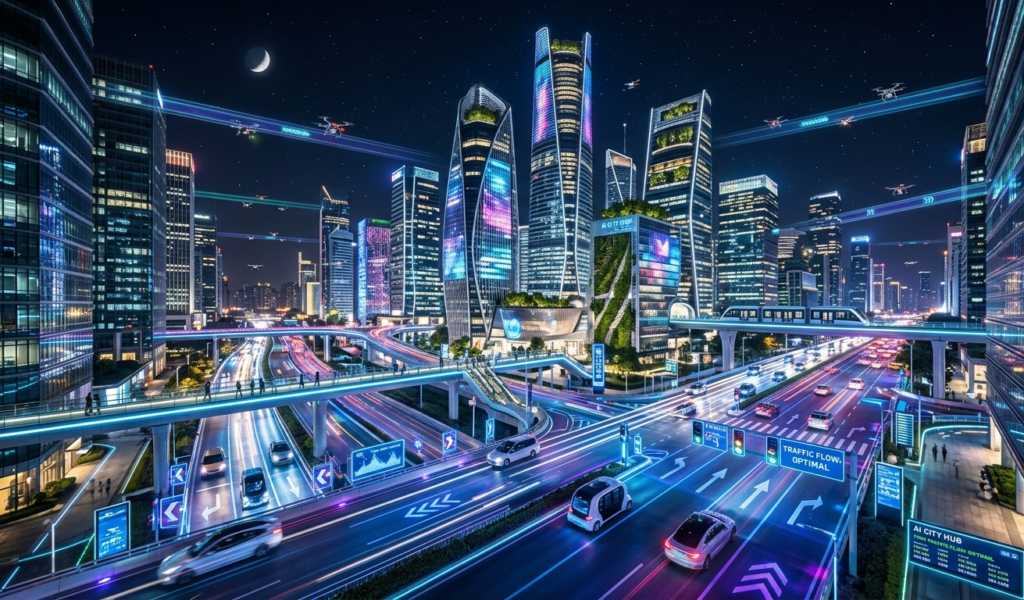
Sometimes I sit and imagine what life will look like just a few years from now, and honestly, it feels both exciting and overwhelming at the same time.
I wake up in the morning, but instead of a loud alarm disturbing my sleep, my system gently wakes me up at the exact perfect time based on my sleep cycle, energy level, and even my schedule for the day.
I don’t wake up feeling tired or confused because everything around me is already organized.
My AI assistant has already checked my messages, sorted my tasks, and even prioritized what is important and what can wait.
Even my outfit is suggested based on the weather, my appointments, and my personal preferences, so I don’t waste time thinking or stressing over small decisions.
When I step outside, I don’t need to worry about traffic or delays because transportation systems powered by future AI innovations already calculate the fastest routes in real time, avoiding congestion before it even happens.
At that point, life starts to feel smoother, faster, and more efficient, but at the same time, there is a silent pressure building,the pressure of keeping up with everything that is changing so quickly.
Because even though future AI innovations are making life easier, they are also speeding everything up, and the real struggle becomes not just living, but adapting fast enough to not fall behind.
1. AI Assistants That Actually Understand Real Life
One of the most powerful future AI innovations I can see coming is the rise of truly intelligent personal assistants that go far beyond what we have today.
Right now, AI assistants like Siri or Google Assistant can answer basic questions, set reminders, or play music, but they still feel limited and robotic.
In the future, these systems will understand humans on a much deeper level, almost like they can read between the lines of our emotions and daily behavior.
They will be able to detect stress in your voice, recognize when you are tired or distracted, and even predict what you might need before you say it out loud.
For example, if I’ve had a long and stressful day, my AI might automatically reduce unnecessary notifications, adjust my schedule, suggest rest, and even create a calm environment with music and lighting that helps me relax.
This level of personalization is one of the biggest future AI innovations because it turns technology from something we use into something that actively supports our mental and emotional well-being in real time.
2. AI in Healthcare: Detecting Problems Before They Become Serious

Another major area where future AI innovations will completely change everything is healthcare, and honestly, this might be one of the most important transformations of all.
Today, many people only discover health problems when it has already become serious, and sometimes it is even too late to fully recover. But in the future, AI will be able to monitor our health continuously through smart devices like watches, sensors, and even everyday gadgets we use without thinking twice about them.
These systems will track patterns in our heartbeat, sleep, breathing, movement, and other vital signs, then analyze them in real time to detect early warning signs of diseases before symptoms even appear.
Imagine getting a simple message like: “Your body is showing signs of unusual stress patterns. You should slow down and consider a medical check-up.” That kind of early detection, powered by future AI innovations, could prevent serious illnesses, reduce sudden deaths, and help people live longer and healthier lives without even realizing how much protection they are receiving in the background.
3. Education Will Become Fully Personalized
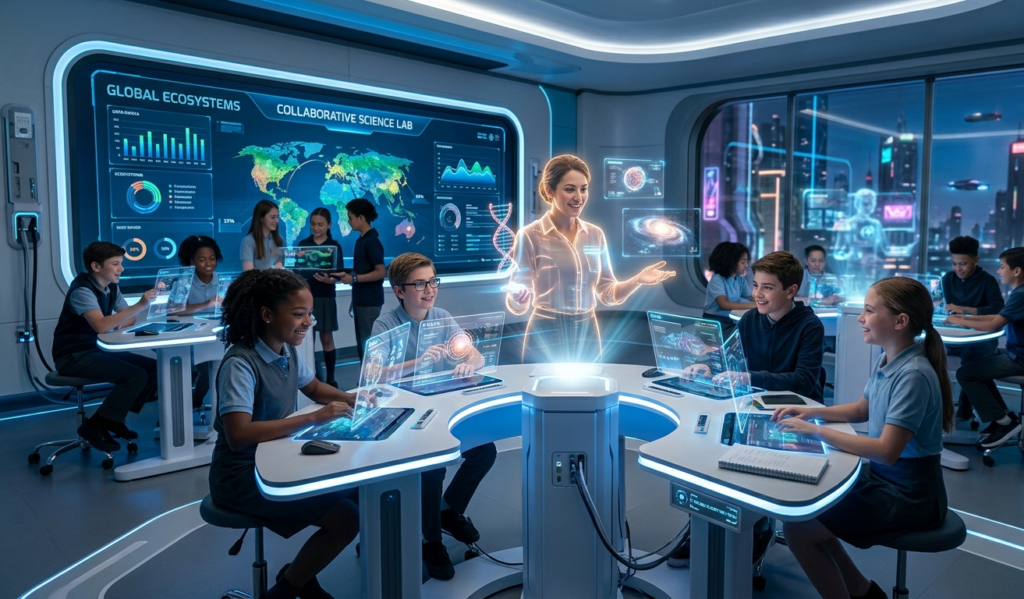
Education is another area where I strongly believe future AI innovations will completely change the game for students everywhere.
Right now, one of the biggest problems in learning is that students are all expected to move at the same speed, even though everyone understands differently.
Some students learn fast, some need more time, and many people fall behind simply because the system is not designed for individual learning styles. But with future AI systems, learning will become fully personalized to each student’s pace, strength, and weakness.
AI tutors will be able to explain complex topics in extremely simple ways, switch languages instantly, and even repeat lessons in different styles until the student understands properly.
They will also identify where a student is struggling and immediately adjust the teaching method to fix that gap.
This is one of the most powerful future AI innovations because it means education will no longer depend on location, money, or access to good teachers,anyone with a phone or device will be able to learn at a very high level.
4. The Truth About AI and Jobs (My Honest Thoughts)
When I think about future AI innovations, one of the biggest concerns that comes to mind is jobs, and I think it is something we need to talk about honestly instead of ignoring it. Yes, it is true that some jobs that involve repetitive tasks will likely disappear because machines can do them faster and more accurately.
However, at the same time, new opportunities will be created that never existed before.
We will start seeing roles like AI trainers, prompt engineers, digital system managers, and AI ethics specialists, which means the job market is not just shrinking,it is transforming.
The real challenge will not be about losing jobs, but about adapting quickly enough to stay relevant in a world driven by future AI innovations.
In my opinion, AI will not replace humans completely; instead, it will replace people who refuse to learn and grow with technology.
5. Smart Cities Will Reduce Daily Stress
One of the most exciting future AI innovations is the development of smart cities that are designed to reduce everyday stress and improve quality of life.
Imagine living in a city where traffic jams are minimized because systems automatically control traffic flow in real time, where waste is collected efficiently before it becomes a problem, where electricity is managed intelligently to avoid blackouts, and where public transport runs exactly on schedule without delays.
These systems will work quietly in the background, making life smoother without people needing to think about it.
Even security will become smarter, with AI systems detecting risks early and responding instantly when needed.
This kind of city design will not just improve convenience,it will completely change how people experience daily life.
6. AI Will Boost Creativity, Not Kill It
There is a common fear that AI will take away human creativity, but I honestly see it differently when I think about future AI innovations.
Instead of replacing creativity, AI will actually amplify it by helping people turn ideas into reality much faster and easier.
Musicians will be able to create full songs based on simple ideas or moods, designers will generate logos and websites instantly, and content creators will produce professional-level work without needing expensive tools or teams.
This means creativity will no longer be limited to people with resources, but will become accessible to almost everyone, especially individuals who only have a smartphone but big ideas. In this way, future AI innovations will open doors for millions of creators around the world.
Learning AI skills like machine learning, prompt writing, and automation can help you stay relevant in the future job market, and platforms like coursera which offer courses that teach these skills from scratch
7. The Real Challenge: Keeping Up With Change
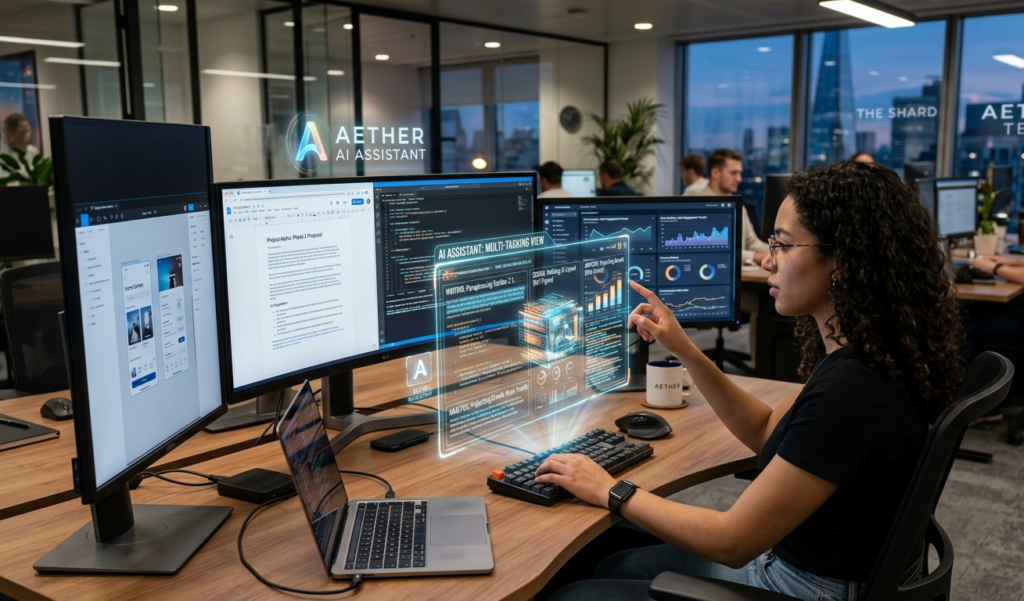
Even though everything about future AI innovations sounds exciting, I also think we cannot ignore the fact that adapting to this speed of change will be very challenging for many people.
Technology is moving so fast that learning new systems, tools, and skills will become a continuous process rather than something you do once.
People will need to constantly update themselves to stay relevant in work, education, and even daily life.
The biggest challenge of the future will not just be access to technology, but the ability to adapt quickly without feeling overwhelmed or left behind.
According to Fiverr, people are already making money by offering AI services such as AI-generated content, AI art, and prompt engineering at fiverr, showing how AI is creating new online income streams.
Risks and Disadvantages of AI
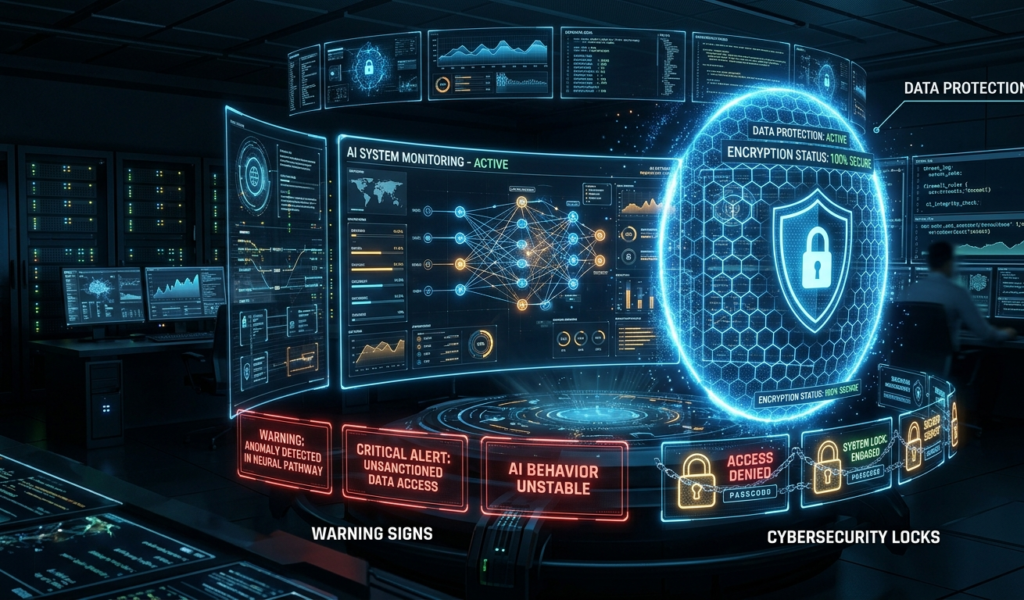
Even though future AI innovations can make life easier and more advanced, there are still important risks we need to consider.
One major disadvantage is job loss, as AI may replace many repetitive jobs, leaving some people struggling to find new work if they don’t have updated skills.
Another issue is over-dependence, where people rely too much on AI and start losing their own thinking and problem-solving abilities.
Privacy is also a big concern because many future AI innovations collect personal data, which can be misused if not properly protected.
In addition, AI systems are not always perfect,they can make mistakes or show bias based on the data they are trained on, leading to unfair outcomes.
Lastly, there is the risk of misuse, where AI could be used for scams, misinformation, or cyberattacks.
This shows that while future AI innovations are powerful, they must be used carefully and responsibly.
Conclusion:
We Are Already Living in the Beginning of the Future
When I look at everything happening today, I realize something very important: we are not waiting for the future anymore,we are already inside it.
The future AI innovations that are coming will completely reshape how we live, from healthcare and education to work, communication, and even how we solve daily problems.
But instead of seeing AI as something to fear, I see it as something we need to grow with and understand better.
It is not about machines replacing humans; it is about humans learning how to use machines to improve life.
And honestly, the biggest question you need to ask yourself is simple:am I ready to grow with future AI innovations, or will I struggle to keep up with a world that is already changing without waiting for me?
If you’re exploring ways to earn online, you might also want to check out my guide on Top 10 Online Jobs You Can Do From Home, where I break down simple and legit remote opportunities you can start even with just your phone.
