
- Simple Ways to Use Technology to Transform Your Life and Make Money - August 19, 2026
- How to Make Money on Social Media Without Any Followers - July 30, 2026
- 15 Life-Changing Discoveries You Need to Know - July 26, 2026
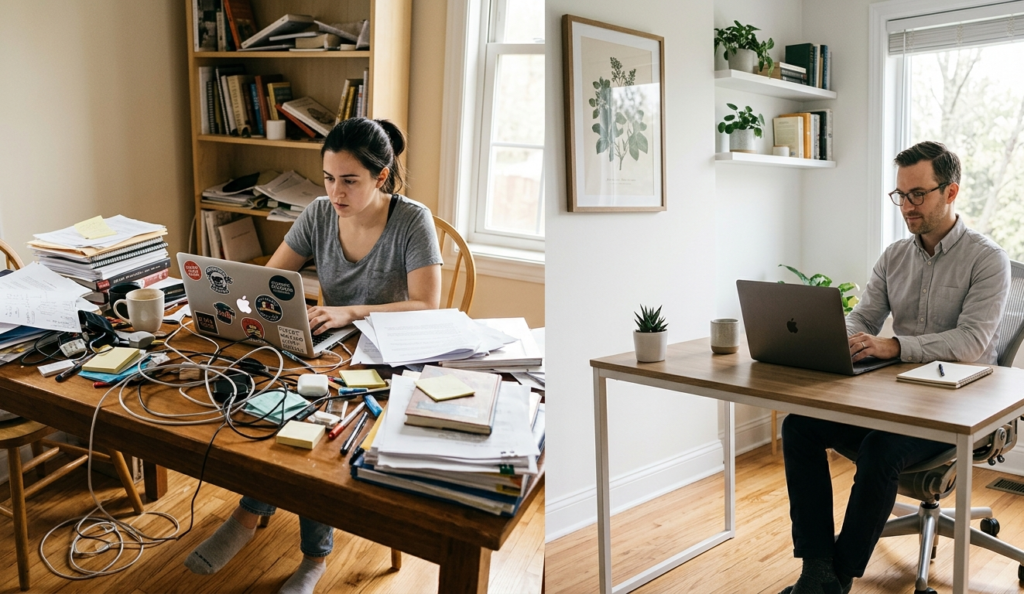
Working from home can feel like a dream at first,no commuting, flexible hours, and the comfort of your own space. But after a while, reality sets in.
You start noticing distractions everywhere, your focus becomes inconsistent, and your productivity begins to drop without you fully understanding why.
The truth is, your home environment plays a much bigger role in your output than most people realize. You don’t necessarily need expensive furniture or a professional office setup to fix this.
What you really need are simple, practical changes that turn your space into a productivity-friendly zone.
With the right hack to improve your home office, even a small corner of your room can become a powerful workspace that helps you think clearly, stay organized, and get more done with less stress.
If you’re trying to stay productive while also managing a busy lifestyle, it’s just as important to take care of your meals, and you can learn simple and affordable strategies in this guide on healthy meal prep ideas for busy people here
1. Create a Clear Work Zone That Separates Work From Rest
One of the biggest mistakes people make when working from home is mixing work spaces with relaxation areas.
Working from your bed or couch might feel comfortable at first, but over time, it confuses your brain and reduces your ability to focus.
Your mind needs clear boundaries to function effectively. That’s why creating a dedicated work zone is so important, even if it’s just a small desk in a quiet corner of your room.
When you consistently use the same spot for work, your brain begins to associate that area with productivity, making it easier to enter focus mode whenever you sit down.
2. Improve Lighting to Boost Energy and Reduce Eye Strain
Lighting can completely change how you feel while working. Poor lighting makes you feel tired, reduces concentration, and can even cause headaches after long hours.
A simple improvement is to position your desk near natural light so your workspace feels more open and refreshing during the day.
If that’s not possible, a small LED desk lamp can make a huge difference. You can also brighten your space using light-colored surfaces or reducing dark clutter around your desk.
Good lighting doesn’t just help you see better,it helps your brain stay alert and active for longer periods.
3. Use Comfortable Seating to Support Long Working Hours
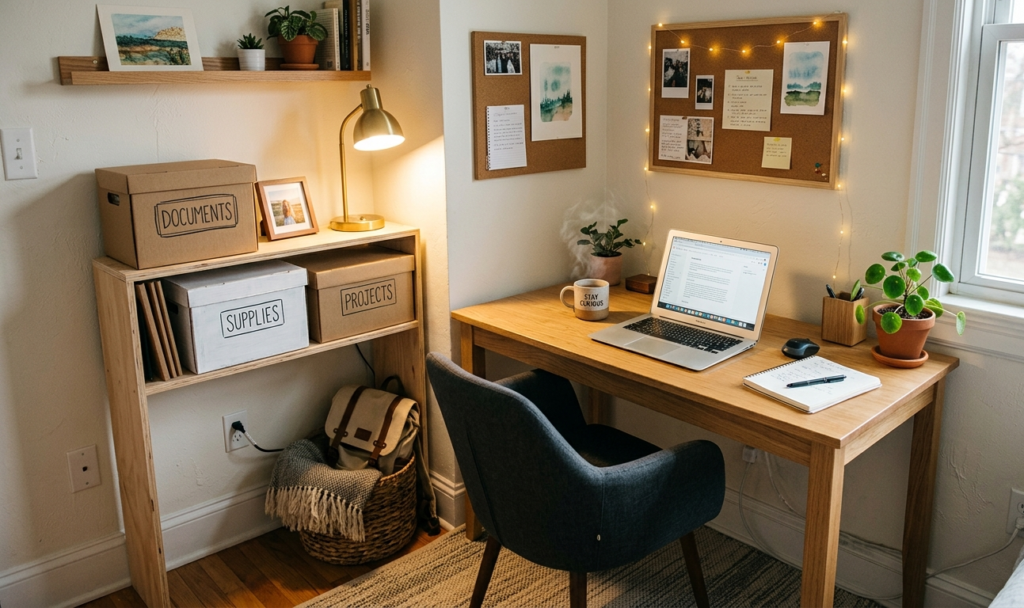
Many people underestimate how much their chair affects productivity. Sitting in an uncomfortable position for hours leads to back pain, stiffness, and constant distractions as your body tries to adjust.
You don’t need an expensive ergonomic chair to solve this problem. Simple DIY adjustments like adding cushions, folded towels, or small pillows can significantly improve comfort.
When your body feels supported, your mind can focus better on tasks instead of dealing with physical discomfort, which improves both speed and efficiency.
4. Declutter Your Workspace to Clear Mental Distractions
A messy workspace often leads to a messy mind. When your desk is filled with unnecessary items, your brain processes too much visual information, making it harder to concentrate.
A powerful hack to improve your home office is to keep your desk as clean and minimal as possible. Spend a few minutes each day removing items you don’t need, such as old papers, unused chargers, or random objects.
A clean workspace creates mental clarity and helps you approach your tasks with a more focused mindset.
5. Use DIY Storage Solutions to Stay Organized
You don’t need expensive organizers to keep your workspace tidy. Everyday household items can be repurposed into effective storage solutions.
Shoeboxes can store documents, small baskets can hold office supplies, and cups can be used for pens and tools.
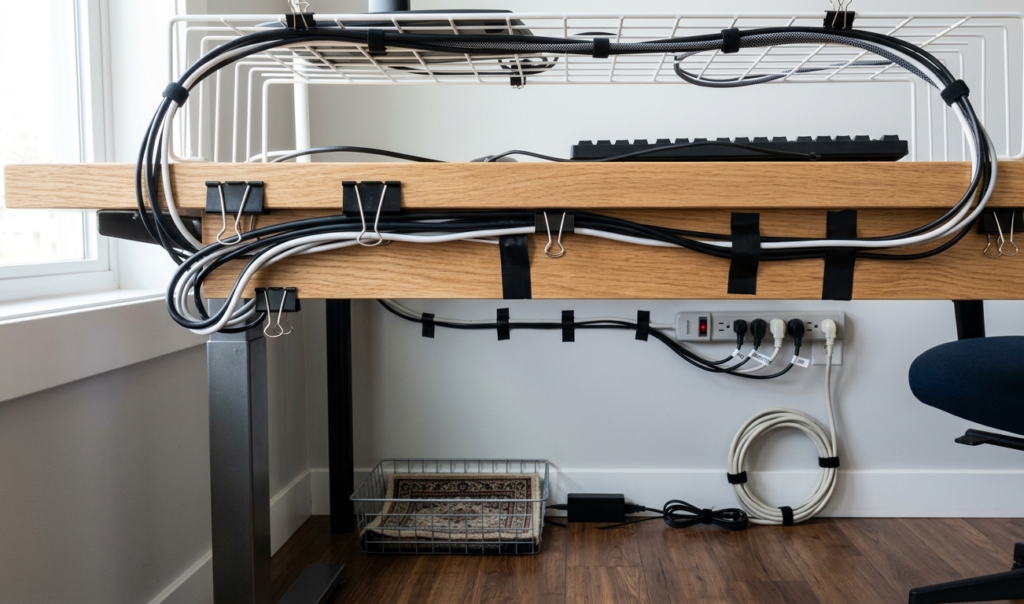
Even simple binder clips can help manage cables and reduce clutter under your desk. When everything has a designated place, you save time, reduce frustration, and keep your workspace looking clean and functional.
If you are looking for affordable DIY office setup inspiration, you can check creative workspace ideas on Pinterest
6. Manage Cables to Reduce Visual Stress
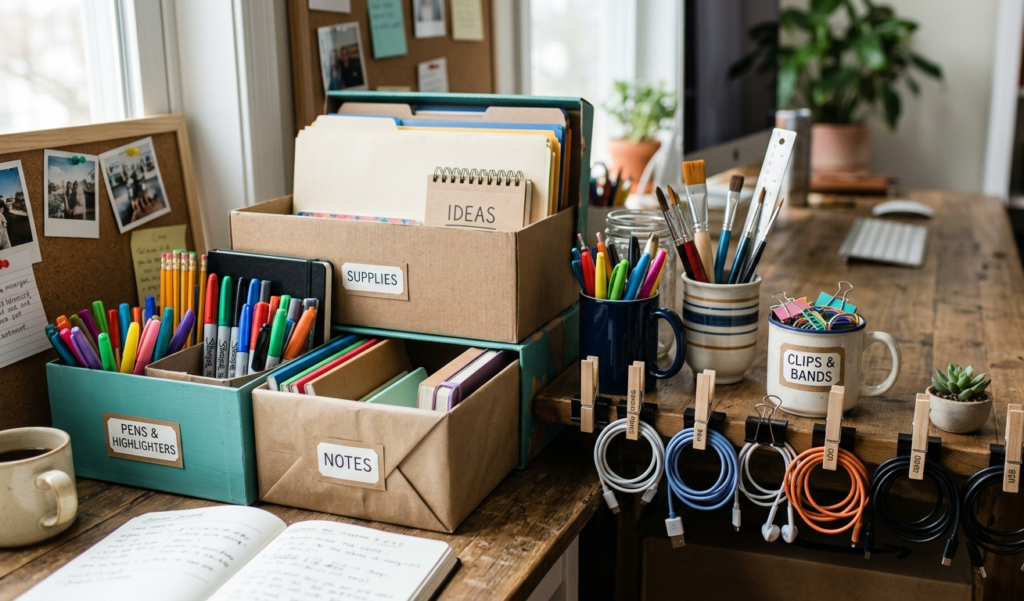
Messy cables can make even a clean desk feel disorganized. Tangled wires create visual stress and can distract you without you realizing it.
A simple DIY solution is to use clips, rubber bands, or even cardboard rolls to group and guide your cables neatly.
You can also tape cables under your desk to keep them out of sight. This small change makes your workspace look more professional and helps you maintain a calm working environment.
7. Add Minimal Personal Decorations for Motivation
Your workspace should not feel dull or lifeless. Adding a few personal touches can improve your mood and motivation while working.
A small plant, a motivational quote, or a simple photo can make your space feel more enjoyable. However, it’s important to keep it minimal. Too many decorations can become distracting, so focus on a few meaningful items that inspire you without overwhelming your attention.
8. Control Noise to Maintain Focus and Flow
Noise is one of the biggest productivity killers when working from home. Whether it’s people talking, traffic, or household activity, distractions can break your focus quickly.
Using earphones, playing soft background music, or closing windows during noisy periods can help reduce interruptions.
You can also create a mental habit of blocking out distractions during work hours, which trains your brain to stay focused even in less-than-perfect environments.
9. Create a Daily Start and Stop Routine
Without structure, working from home can feel endless. One of the most effective hacks to improve your home office is creating simple routines that signal the start and end of your workday.
This could be turning on a lamp when you begin work or shutting down your laptop and clearing your desk when you’re done.
These small rituals help your brain separate work time from personal time, reducing burnout and improving long-term productivity.
For simple ergonomic advice that helps reduce back pain while working from home, this resource from Mayo Clinic is very helpful
10. Use Vertical Space to Maximize Small Areas
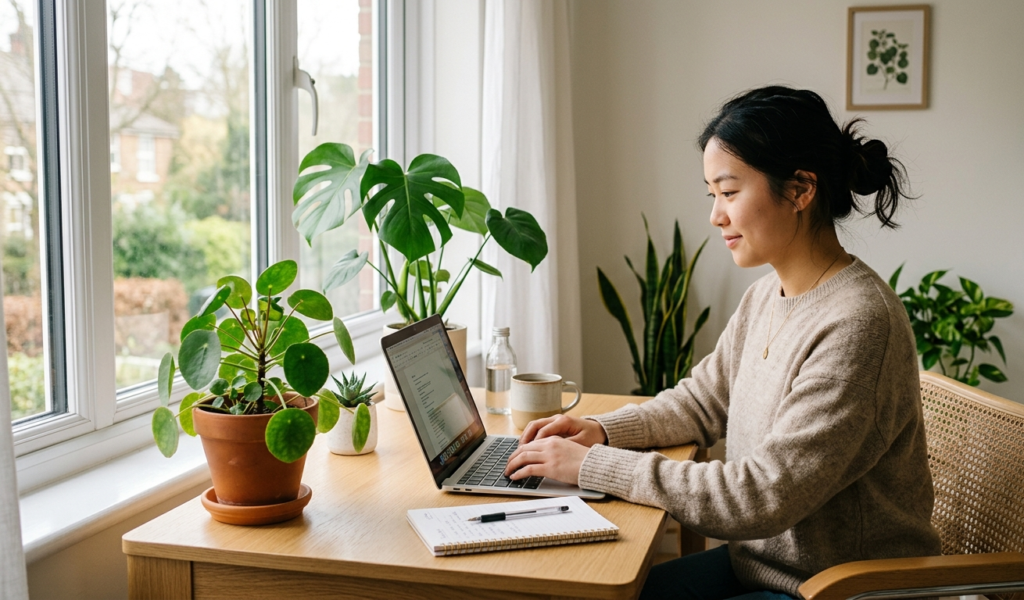
If your workspace is small, you need to think upward instead of outward. Walls can be used for shelves, hooks, or simple storage boards that keep your desk area free from clutter.
Vertical storage helps you maximize space while keeping essential items within reach.
This makes your workspace feel more organized and less crowded, even in tight environments.
11. Improve Airflow to Stay Fresh and Alert
A stuffy room can make you feel sleepy and reduce your ability to concentrate.
Good airflow keeps your mind fresh and your energy levels stable. Opening windows regularly or using a fan can improve circulation and make your workspace more comfortable.
Even small changes in air quality can significantly improve how long you can stay focused without feeling tired.
12. Take Short Breaks to Reset Your Mind
Working for long hours without breaks reduces productivity instead of improving it.
Your brain needs short pauses to recharge. Taking a 5–10 minute break every hour can help you reset your focus and return to tasks with better clarity.
During breaks, step away from your desk, stretch, or simply relax your eyes. These small pauses actually improve long-term performance.
13. Keep a Distraction Control System
Distractions are inevitable, but how you manage them matters.
A simple trick is to keep a “distraction box” where you temporarily place items like your phone or unrelated materials while working.
This reduces the temptation to constantly check them. When you control distractions instead of letting them control you, your productivity naturally improves.
14. Build a Simple Task System to Stay on Track
One of the easiest ways to lose productivity in a home office is by jumping between tasks without a clear plan. When everything feels urgent, nothing gets done properly.
A simple task system can fix this without any complicated tools. You can write your top 3 priorities for the day on a paper or sticky note and focus only on them first before anything else.
This helps you avoid overwhelm and keeps your attention on what actually matters. Even a basic to-do list separated into “must do,” “should do,” and “can wait” can make your day feel more organized and less stressful.
The clearer your tasks are, the easier it becomes to stay focused and complete work faster.
15. Limit Digital Distractions Around Your Workspace
Digital distractions are one of the biggest productivity killers in any home office. Notifications from social media, messages, and random browsing can easily break your focus and waste valuable time.
A simple improvement is to silence non-essential notifications while working or use “do not disturb” mode during focused hours.
You can also keep your phone slightly out of reach or face down to reduce temptation. If possible, separate your work browser tabs from entertainment tabs so your mind stays in work mode.
These small adjustments help you stay mentally present, allowing you to work more efficiently without constantly switching attention.
16. Keep Improving Your Setup Gradually
A productive home office is not something you build once and forget,it improves over time.
One mistake many people make is trying to perfect everything at once, which can be overwhelming and unnecessary.
Instead, focus on small upgrades as you notice problems in your workflow. Maybe you improve your chair today, adjust your lighting next week, or organize your cables later.
This gradual approach makes it easier to maintain consistency without stress. Over time, these small improvements add up and create a workspace that feels more comfortable, efficient, and personalized to your needs.
If you want to improve your productivity while working from home, it’s also important to manage your digital habits effectively, and this guide on how to reduce screen time without losing productivity explains practical strategies you can apply here
Common Mistakes to Avoid
One common mistake when setting up a home office is working from anywhere in the house without a fixed space, which confuses your brain and reduces focus over time.
Another mistake is ignoring comfort and using poor seating or posture for long hours, which leads to back pain and constant distraction.
Many people also overload their workspace with unnecessary items, thinking it makes them productive, but it actually creates visual clutter and mental stress.
Poor lighting is another issue that often goes unnoticed, yet it causes eye strain and reduces energy levels.
Some people also fail to set boundaries between work and personal life, leading to burnout because they never truly “switch off.”
Lastly, relying too much on motivation instead of building a routine is a major mistake, since consistency is what actually drives productivity in a home office setup.
Small DIY Changes Create Powerful Results
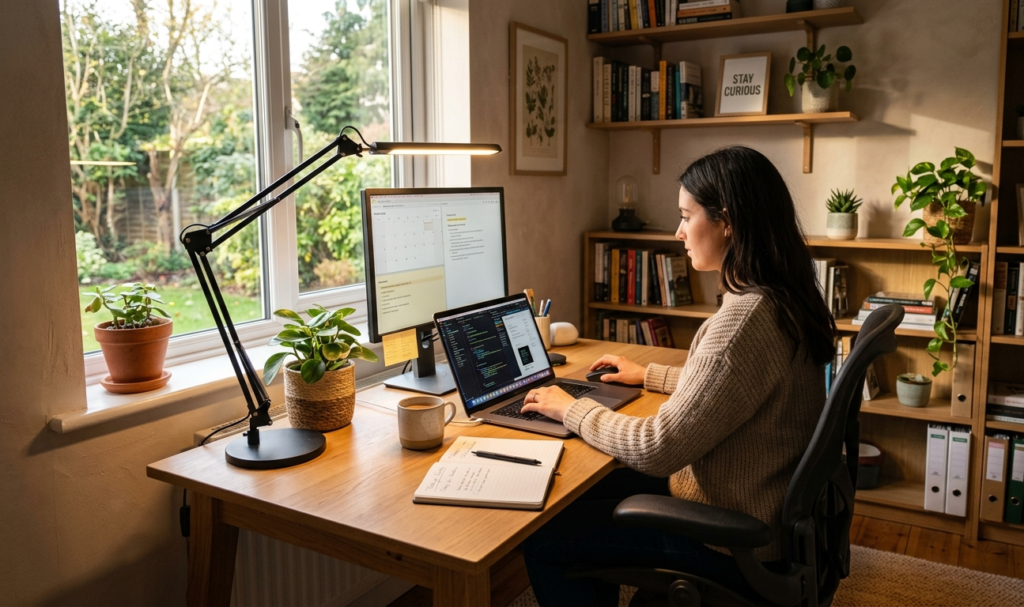
Improving your home office doesn’t require a big investment or complicated setup. It starts with small, intentional changes that gradually transform your environment into a space that supports focus, comfort, and productivity.
From lighting and seating to organization and routines, each improvement plays a role in making your workspace more efficient.
When you consistently apply these simple DIY hacks to improve your home office, you begin to notice real changes in how you work,less stress, better focus, and higher output.
The key is to start with what you already have and improve step by step, because even the smallest changes can lead to big results over time.
If you want more practical ideas on improving your workspace productivity, you can explore this guide on home office organization tips from Forbes
Frequently Asked Questions (FAQ)
Many people ask what the easiest hack to improve your home office is, and the simplest answer is creating a dedicated work zone, even if it’s just a small corner, because it trains your brain to focus faster.
Others wonder if expensive furniture is necessary, but the truth is you can work effectively with what you already have by improving comfort with DIY solutions like cushions, better lighting, and simple storage ideas.
A common question is how to stay productive at home, and the best approach is to build a routine, reduce distractions, keep your desk clean, and consistently work in the same space.
Low productivity in a home office is usually caused by clutter, poor lighting, uncomfortable seating, and distractions like phones or noise.
As for organization, a quick daily reset of your workspace is helpful, while a deeper cleanup once a week keeps everything structured and supports long-term focus and efficiency.
